Choosing between a beaker bong, straight tube, recycler, or compact glass bong can feel confusing. Every design promises a smoother experience, yet the wrong choice may prove unstable, fragile, difficult to clean, or unsuitable for your space. This guide explains how to choose a glass bong by comparing size, shape, filtration, glass quality, joints, accessories, cleaning, price, and safety. Adults should also check local laws before buying or using any cannabis accessory.
1. How to Choose a Glass Bong: Start With Your Priorities

The best glass bong depends on how you plan to use, store, clean, and maintain it. Therefore, begin by identifying your most important features before comparing individual designs. Our bong features and specifications guide explains every spec you will see.
Decide What Matters Most
Some buyers prioritise smooth filtration, while others need portability, durability, or simple cleaning. Additionally, appearance and price may influence your final decision. A beautiful bong offers little value if it cannot fit safely in your storage space.
- Smooth filtration: Look for suitable water capacity and manageable diffusion.
- Portability: Choose a compact model that fits your travel or storage needs.
- Durability: Consider borosilicate glass, stable construction, and reliable joints.
- Easy cleaning: Prefer open chambers, removable parts, and fewer intricate pathways.
- Stability: Check the base, balance, and overall centre of gravity.
- Price: Set a realistic budget before browsing premium features.
Your session style also matters. For example, occasional users may prefer a simple medium bong with one downstem. Frequent users might value thicker glass, replacement parts, and easier maintenance.
Follow a Simple Buying Process
First, choose the size that suits your space and handling preferences. Next, select a shape, such as a straight tube, beaker, round base, mini, or recycler. Then, compare the filtration system and water chamber.
After that, inspect the glass quality, joint size, bowl compatibility, and available accessories. Finally, compare prices from reputable sellers, such as the selection available through glass bong and smoking accessory collections.
A simple, well-made bong often beats a complex design with unnecessary features. More chambers can increase cleaning time, water use, airflow resistance, and breakage risk.
Most importantly, purchase only where the product and intended use comply with Australian law. Age restrictions and state or territory rules may apply. The Australian Government explains that drug laws differ across Australia, so check official guidance before purchasing.
2. Choose the Right Bong Size and Shape
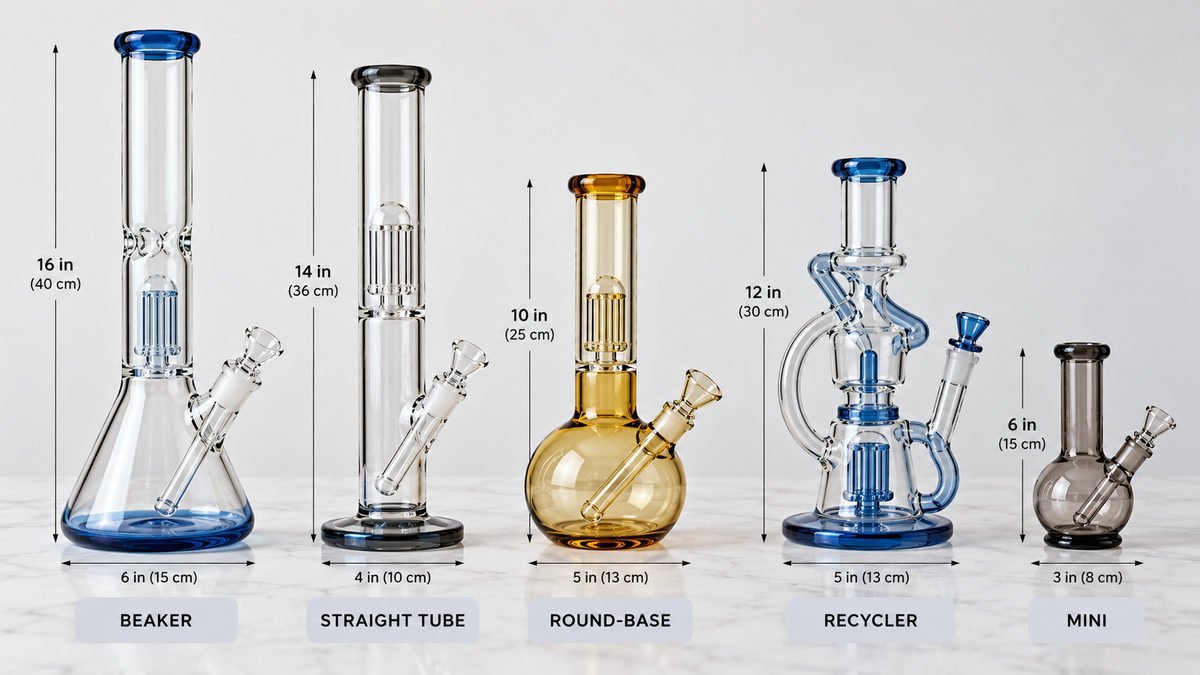
Bong height and chamber size influence cooling, airflow, filtration, portability, storage, and handling. Therefore, size should match your experience, available space, and preferred level of maintenance. Compare beaker vs straight tube bongs to see which shape suits you.
Small, Medium, and Large Bongs
Small and medium bongs suit many beginners because they are easier to control, clean, store, and transport. They also require less water and usually cost less than larger designs.
Larger bongs create a longer airflow path, which may provide more cooling. However, they need more material, water, storage space, and cleaning time. Their height may also make them harder to handle safely.
Compact or mini bongs work well when portability matters. Nevertheless, their smaller chambers usually provide less cooling and filtration. They can also feel less stable when placed on uneven surfaces.
Common Bong Shapes
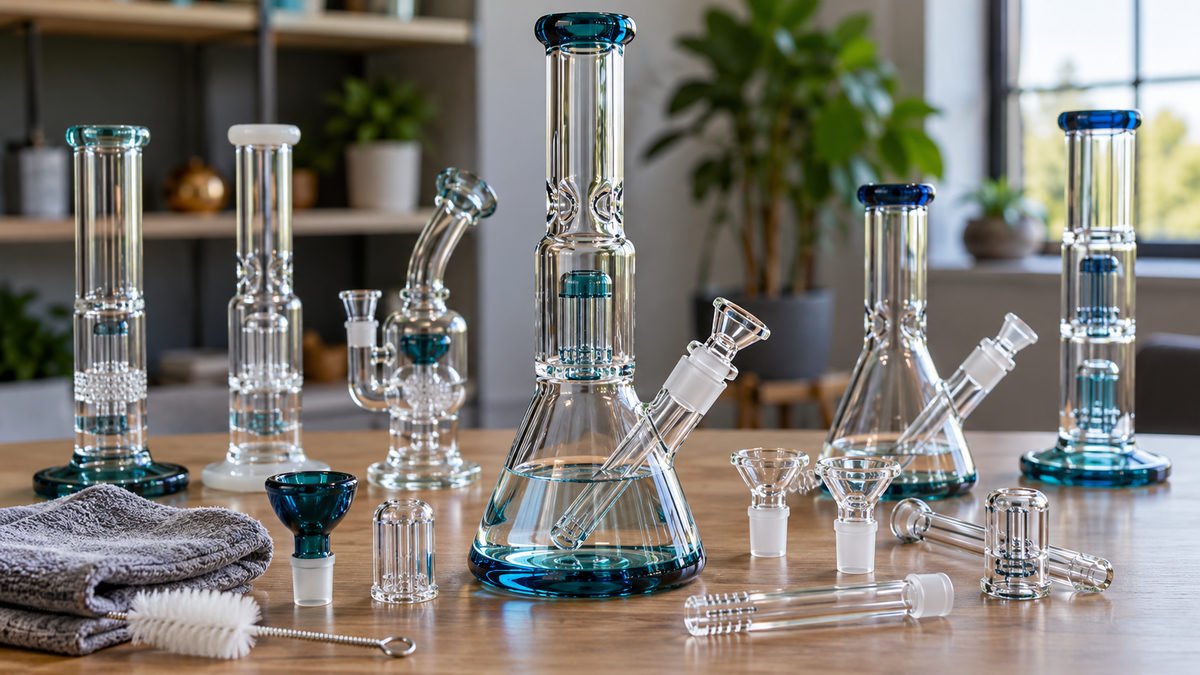
| Shape | Main strengths | Possible drawbacks |
|---|---|---|
| Straight tube | Direct airflow, compact footprint, easy filling | May create stronger airflow and more splashback |
| Beaker | Broad base, stable design, larger water capacity | Uses more water and needs more storage space |
| Round base | Stable everyday shape with balanced handling | May offer less capacity than a large beaker |
| Mini bong | Portable, discreet, and easy to store | Lower cooling capacity and greater travel risk |
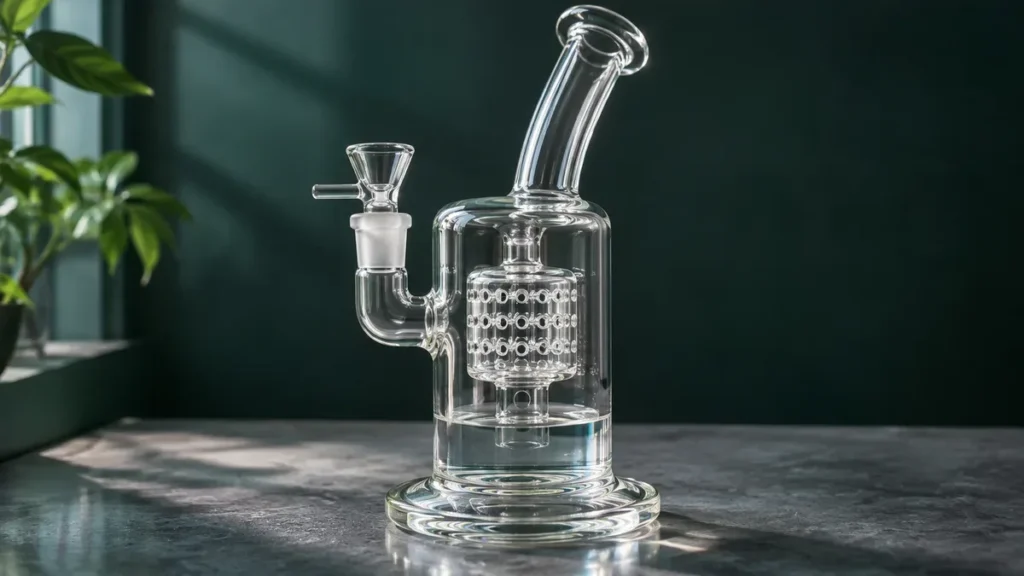
| Recycler | Repeated water circulation and advanced cooling | More complex, fragile, and difficult to clean |
Straight tube bongs offer a direct path from bowl to mouthpiece. Therefore, they fill easily and occupy little bench space. However, the direct design may allow more splashback if the water level rises too high.
Beaker bongs provide a broad base and larger chamber. As a result, they resist tipping better than many narrow designs. Their classic shape suits buyers who want stability and useful water capacity.
Recycler bongs repeatedly circulate water through connected chambers. This advanced movement can improve cooling, but it also creates more pathways for residue. Choose one only if you accept extra cleaning and careful handling.
Before buying, check the base stability, overall balance, mouthpiece comfort, water capacity, and storage footprint. Additionally, make sure the bong fits comfortably where you plan to keep it.
3. Evaluate Glass Quality, Thickness, and Durability
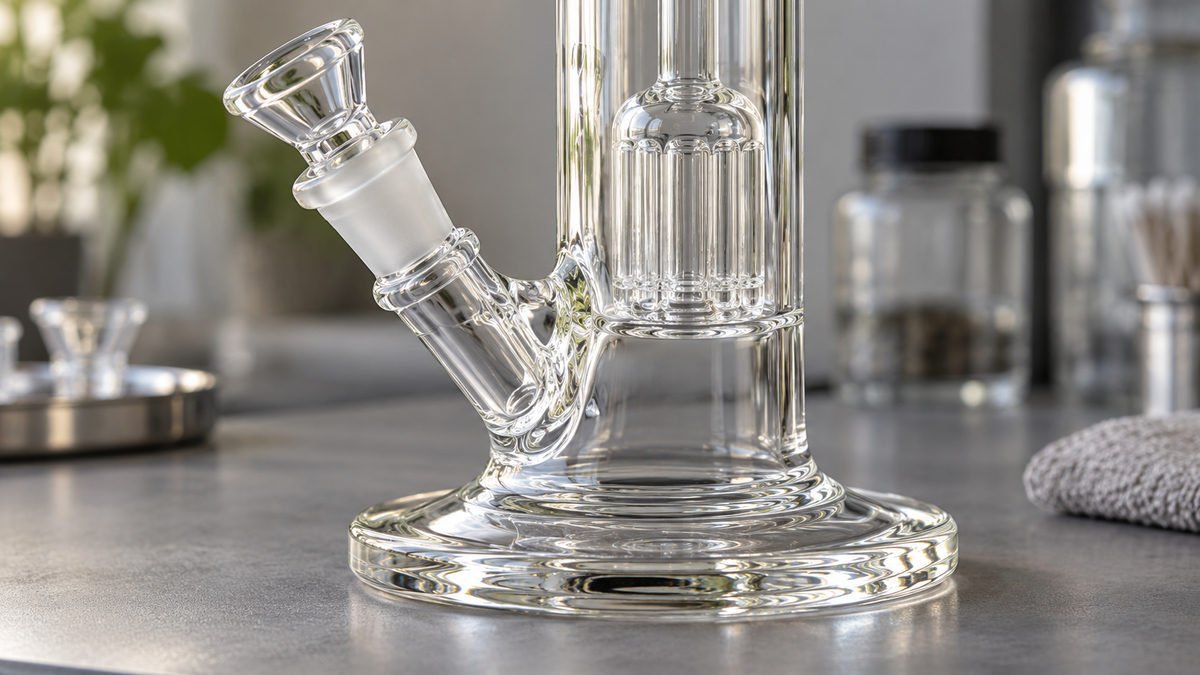
Glass quality affects safety, longevity, airflow, cleaning, and everyday handling. For most buyers, borosilicate glass offers a practical balance between strength and heat resistance. Our breakdown of thick vs thin glass shows why wall thickness matters.
Why Borosilicate Glass Matters
Borosilicate glass handles temperature changes better than ordinary glass. Therefore, it generally suits water pipes that experience changes between room temperature, warm water, and cleaning solutions.
Thicker glass can improve impact resistance and reduce the chance of damage from minor knocks. However, thickness alone does not guarantee good construction. Poor joints, uneven walls, or a weak base can still create problems.
Lightweight portable models may use thinner glass for easier transport. Meanwhile, everyday bongs often benefit from medium-to-thick construction. Very thick glass offers extra strength, but it also adds weight and reduces portability.
Inspect the Construction Carefully
Look for even walls, smooth edges, clean welds, secure joints, and symmetrical construction. Additionally, place the bong on a flat surface and check whether the base sits evenly.
- Inspect the mouthpiece for rough edges or sharp finishing.
- Check that the downstem fits securely without excessive movement.
- Look for clear glass without visible cracks, chips, or unusual cloudy areas.
- Examine the base for wobbling, uneven contact, or poor balance.
- Confirm that attachments connect cleanly and do not leak.
Good craftsmanship affects airflow, joint strength, water retention, and long-term maintenance. For example, a poorly aligned downstem may create weak diffusion or unwanted leaks.
Warning signs include visible bubbles, hairline cracks, rough mouthpieces, loose fittings, uneven bases, cloudy glass, and weak connections. Therefore, avoid rushing through inspection because small flaws can worsen with regular handling.
A durable glass bong deserves a higher price when it includes reputable manufacturing, replacement parts, warranty coverage, and consistent quality control. Check whether the seller stocks compatible bowls, downstems, and other replaceable components.
Finally, balance durability with portability. A heavy bong may survive more knocks, yet it remains inconvenient for travel. Choose the thickest practical construction for your intended storage and handling habits.
4. Compare Bong Water Filtration and Percolator Types
Bong water filtration cools and conditions airflow before it reaches the mouthpiece. However, more filtration does not automatically create a better experience. Learn how percolators work before paying extra for one.
Understand Downstems and Diffusion
A downstem carries airflow into the water chamber. Its length, diffusion slits, fit, and removability all affect airflow and cleaning.
Longer downstems may place the diffuser deeper in the water. Nevertheless, the stem must match the bong’s joint and water level. A removable downstem usually makes cleaning and replacement easier.
Water should cover the diffuser without reaching the mouthpiece. Therefore, add water gradually and test the level carefully. Too much water can cause splashback or make the bong harder to use.
Compare Common Percolators
- Honeycomb: Offers substantial diffusion through many small openings, but residue can collect quickly.
- Matrix: Provides broad diffusion, although its intricate channels demand careful cleaning.
- Tree: Uses multiple arms for highly diffusive airflow, but the arms can break easily.
- Showerhead: Balances diffusion and maintenance with a relatively open chamber.
- Inline: Creates useful diffusion through horizontal slits and often remains manageable to clean.
- Recycler: Circulates water repeatedly, but requires more chambers, pathways, and maintenance.
Honeycomb and matrix percolators can deliver substantial diffusion. However, their small openings may trap residue and require soaking, brushes, or repeated rinsing.
Tree percolators create airflow through several arms. In contrast, showerhead and inline designs often provide a practical balance between smooth filtration and simpler maintenance.
Single-percolator bongs usually offer easier airflow and cleaning. Multi-percolator models may provide more cooling, yet they can increase resistance, water use, complexity, and cleaning time.
The easiest percolator to clean usually has open channels, accessible chambers, a removable downstem, and fewer intricate pathways. Therefore, beginners often benefit from straightforward filtration.
Ice catchers hold ice above the water chamber, while splash guards help reduce unwanted water movement. Nevertheless, never overfill the chamber because extra water may travel towards the mouthpiece.
5. Check Joints, Bowls, Accessories, and Ease of Use
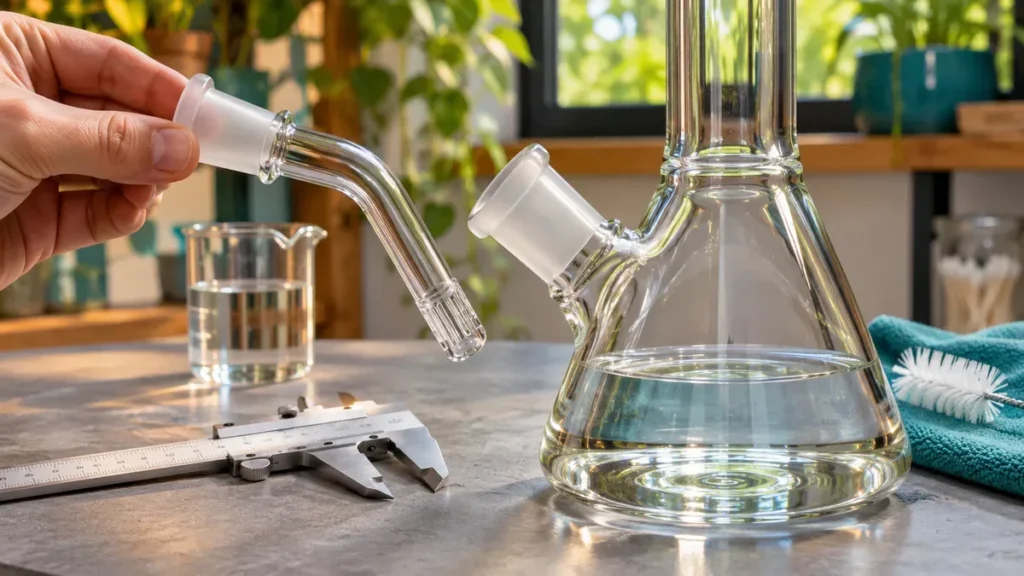
Small compatibility details can determine whether a bong remains convenient over time. Therefore, check the joint, bowl, downstem, and replacement options before buying. Not sure about fittings? Compare 14mm vs 18mm joints.
Match the Joint and Bowl
Bongs commonly use smaller or larger joint formats, with the bowl and downstem needing to match the same diameter. Joint orientation also varies, so check whether the piece uses a standard angled or vertical connection.
Before purchasing accessories, confirm the joint diameter, connection style, and required downstem length. A replacement part that looks similar may still fail to seal correctly.
Bowl size affects capacity, handling, and cleaning frequency. Smaller bowls suit personal use and reduce leftover residue. Larger bowls may hold more material but can require more frequent cleaning.
Choose Practical Accessories
Useful accessories can extend the bong’s life and simplify maintenance. Consider adding only the items that match your design and cleaning habits.
- Replacement bowls and downstems
- Ash catchers and glass screens
- Cleaning brushes and suitable cleaning solution
- Padded storage cases and protective sleeves
- Spare seals or compatible replacement fittings
Convenience features include a wide mouthpiece, stable base, clear water chamber, splash guard, ice catcher, and easy-to-reach joints. Additionally, a clear chamber makes it easier to monitor water quality and residue.
Simple designs usually suit first-time buyers who prioritise easy cleaning and low maintenance. Complex attachments may look impressive, but they add more parts that require attention.
A portable glass bong can be worthwhile when compact storage matters. However, smaller designs usually offer less cooling and face greater breakage risk during travel.
For transport, empty the chamber completely and dry every part. Use a padded case, separate accessories from the main glass, and avoid loose movement inside luggage.
Most importantly, keep glass accessories away from children and pets. Store the bong upright on a stable surface, away from crowded shelves, electronics, and areas with frequent foot traffic.
6. Compare Prices, Maintenance, Safety, and Final Buying Checklist
Glass bong prices usually fall into three broad levels. Entry-level models offer simple shapes and basic filtration. Mid-range borosilicate models typically add stronger construction and better finishing. Use our checklist of what to check before buying a bong.
Premium designs may include handcrafted details, multiple percolators, complex recyclers, or specialised attachments. Therefore, pay more for useful improvements rather than decoration alone.
- Thicker, well-finished glass
- A stable base and reliable joints
- Effective but manageable filtration
- Available replacement parts
- Reputable manufacturing and clear product information
Clean and Maintain the Bong
Use a suitable cleaning solution, warm water, and brushes designed for glass. Avoid sudden temperature changes because thermal shock can crack the bong.
Regular users should clean more frequently than occasional users. Additionally, rinse the chamber when residue begins to build up rather than waiting until the glass becomes heavily coated.
Check seals, replace damaged downstems, prevent resin buildup, dry the chamber fully, and inspect regularly for cracks. Never continue using visibly damaged glass.
Use the bong on a stable surface and handle hot components carefully. Keep water away from electronics, secure the piece after use, and follow responsible adult-use practices.
Australian laws can differ between states and territories. Check official guidance and age restrictions before purchasing or using cannabis accessories. For broader health and legal information, visit the Australian Government drug laws guidance.
Final Buying Checklist
- Suitable size for your space and experience
- Preferred shape and stable base
- Borosilicate glass with appropriate thickness
- Clear airflow and suitable water capacity
- Compatible joint, bowl, and downstem
- Manageable percolator design
- Easy cleaning and accessible replacement parts
- Fair price from a reputable seller
Beginners often suit medium, simple bongs with removable downstems. Experienced users may prefer advanced filtration. Frequent travellers should prioritise compact storage, while smoothness-focused buyers may consider showerhead or inline percolators.
Durability-focused shoppers should choose thicker borosilicate glass and stable bases. Meanwhile, maintenance-focused buyers should avoid intricate pathways and select easy-to-clean chambers.
Conclusion
The best glass bong depends on your priorities, available space, experience, budget, and cleaning preferences. Focus on suitable size, stable design, borosilicate glass, appropriate thickness, effective filtration, compatible joints, and realistic pricing.
Simple, durable models are often easiest to use and maintain. Advanced percolators can add cooling and diffusion, but they also increase cleaning demands and replacement concerns.
Use this checklist to compare legal, age-restricted cannabis accessories from reputable sellers. You can also explore relevant product categories, browse available brands, and read more through the Sweet Puff Australia blog.
Sweet Puff Australia brings together water pipes, glass designs, and related accessories for adult shoppers. Compare product details carefully, then choose the bong that best matches your experience, space, budget, and maintenance preferences.